Focus Buddy guide · October 1, 2026
How to combine a task list with habit tracking
Separate one-time tasks from recurring habits and build a daily routine that connects both with manageable focus sessions.
Tasks and habits solve different planning problems. A task has a finish line, such as submitting an assignment. A habit is something you want to return to, such as reviewing your notes after class. Keeping both visible can help you avoid treating every routine as an overdue project.
Give each item the right home
| Item | Use | Make it concrete |
|---|---|---|
| Finish an essay | Task | Draft the introduction today. |
| Read regularly | Habit | Read one page after breakfast. |
| Prepare a presentation | Task | Outline three main points. |
| Review the day | Habit | Choose tomorrow’s first task before closing the laptop. |
A simple morning routine
- Look at your tasks and choose one that matters today.
- Break it down until the next action fits one focus session.
- Check which recurring habits belong in today’s routine.
- Begin one focus block before expanding the plan.
For example, “finish the presentation” might become “write the outline in a 25-minute session.” Your separate habit could be “take a short walk after lunch.” Completing the habit supports your routine; it does not automatically complete the project.
Keep the habit small enough to repeat
A habit needs a clear action and a moment when it belongs. “Read more” is hard to check. “Read one page after breakfast” gives you a small, visible action. On days with more time, you can continue beyond that minimum.
When you miss a day
Return to the next available opportunity and check whether the action was too large or the timing was inconvenient. A missed day is useful information about the plan. Avoid doubling tomorrow’s target just to make the record look complete.
Use tasks, habits, and focus together
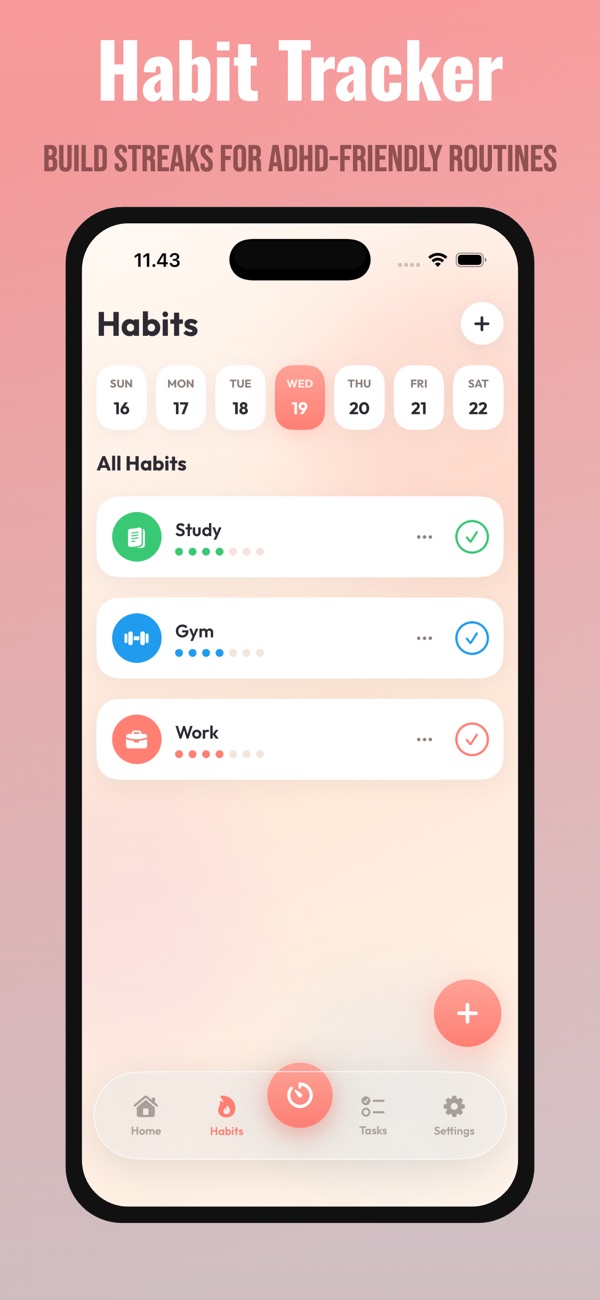
In Focus Buddy, use Tasks for today’s specific outcomes, Habits for routines you repeat, and Focus for a bounded work session. At the end of the day, mark what you actually did and leave one clear next step. Simple progress is easier to interpret than a long list of vague intentions.